
Bathroom Waterproofing in Brooklyn: How to Prevent Leaks, Mold & Tile Damage
The leak came back again. You regrouted last year, you recaulked in the spring, and now the grout is dark, the paint on the ceiling below is bubbling, and the floor near the tub feels soft. That pattern has a name in Brooklyn bathrooms, and it is rarely a grout problem. It is a waterproofing problem hiding behind tile that still looks fine.
Water moves through a tiled shower every single day. The layer that decides whether that water stays in the drain or ends up in your subfloor is one you never see after the tile goes up. This guide explains how bathroom waterproofing in Brooklyn homes actually works, how to spot failure early, and what a proper fix looks like before a small leak turns into a tear out.
Seeing active leaking, soft flooring, or mold that keeps returning? Tap to call and speak to a local specialist at (929) 404-0451. A short visit now is cheaper than replacing framing later.
What Bathroom Waterproofing Actually Is
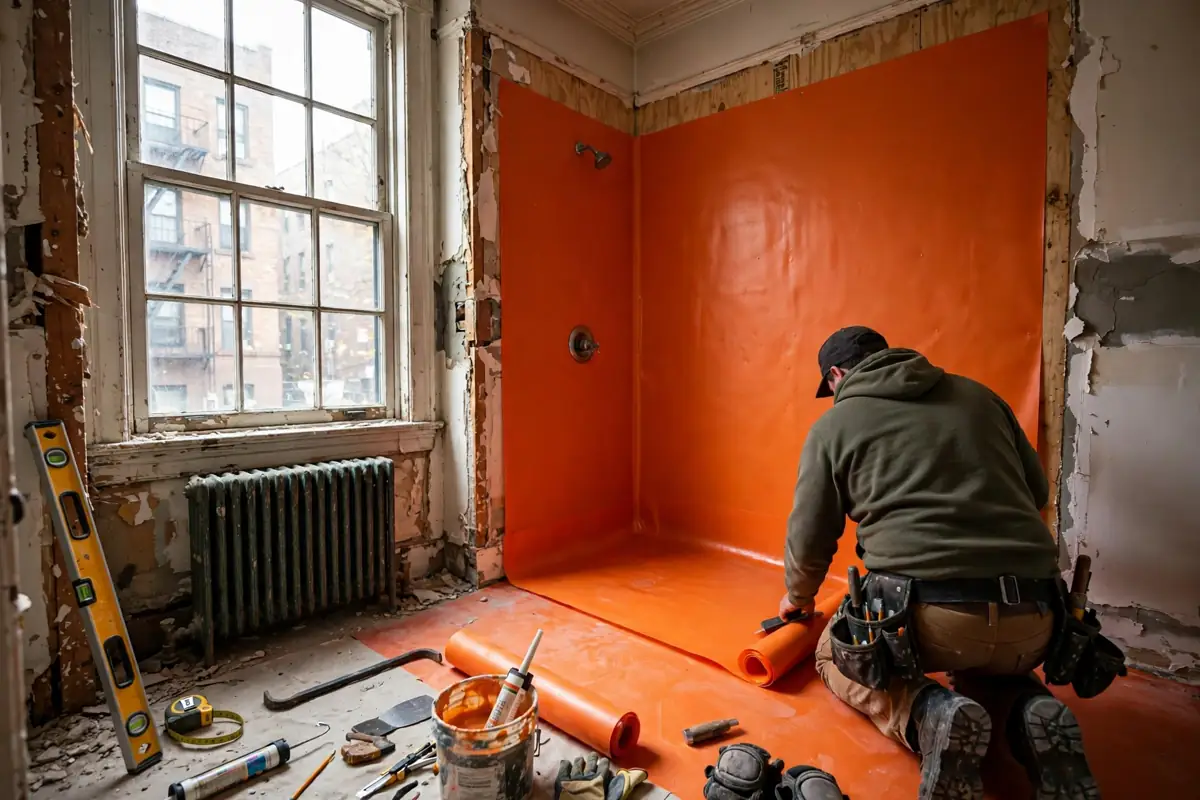
Bathroom waterproofing is a continuous membrane installed behind tile and under shower floors that stops water before it reaches the wall framing, backer board, and subfloor. Tile and grout are the finish, not the barrier. A bonded sheet membrane, a liquid applied membrane, or a waterproof foam board system gives water one path only, toward the drain.
Think of the shower as layers, not a single surface. Water passes through grout lines in small amounts during every shower, and that is expected. The membrane catches that water and directs it to the drain through the sloped shower pan. When the membrane is missing, cut short at a corner, or punctured by a screw, water keeps going until it finds wood.
That is why two showers can look identical and age very differently. One was built on a tested waterproof layer, the other was built on hope and cement board. Cement board resists damage from moisture, but water passes through it. It was never sold as waterproofing, and treating it as waterproofing is the mistake behind a large share of the failed showers our Brooklyn bathroom remodeling team opens up.
Why Does Bathroom Tile Leak?
Bathroom tile leaks because grout is porous, corners move, and the waterproofing layer behind the tile is missing, damaged, or badly detailed at the drain, curb, niche, and valve. Water enters through grout lines and hairline cracks, soaks the setting bed, and travels sideways until it shows up in a ceiling, a wall, or a soft spot in the floor.
Homeowners usually meet this problem in one of four ways:
- Grout that stays dark for hours after a shower, or white mineral crust along the grout lines
- Caulk that cracks or pulls away where the wall meets the tub or shower floor
- Loose, hollow sounding tile, or grout that keeps cracking in the same corner
- A musty smell that cleaning never removes, plus paint peeling on the wall outside the shower
Forum threads from homeowners tell the same story over and over. Regrouting and recaulking get done two or three times, the leak slows down, then it returns. That happens because surface work treats a symptom. If the membrane behind the tile has failed, or never existed in an older Brooklyn bathroom, new grout cannot repair a layer it cannot reach.
Plumbing Leak or Waterproofing Leak? They Are Not the Same Job
A plumbing leak comes from a pressurized supply line, a valve body, a shower arm connection, or a drain joint. It often leaks on a schedule tied to water use at one fixture, and it can show up even when the shower walls stay dry. A waterproofing leak needs water running over the tile surface, and it usually tracks shower use, spray direction, and time.
That difference decides the repair. A plumber can fix a valve and the wall can still leak every time you shower, because the membrane is gone. A tile contractor can regrout a shower and the ceiling can still stain, because the drain connection is loose. Good diagnosis separates the two before anyone quotes you a full tear out.
Not sure which one you have? Speak to a local specialist at (929) 404-0451 before you pay for the same repair twice.
Signs Your Waterproofing Has Failed
Failed waterproofing shows up as stains on the ceiling below, grout that stays damp, loose tile, swelling baseboards, a soft subfloor near the tub, and mold or a musty odor that returns after cleaning. One sign can be minor. Two or three together usually mean water has been reaching the layers behind the tile for a while.
| Sign you can see | What it often points to | How urgent it is |
|---|---|---|
| Stain on the ceiling below the bathroom | Shower pan, drain, or membrane failure | High, get it checked soon |
| Grout dark hours after showering | Saturated setting bed under the tile | Medium, monitor and test |
| Cracked grout in the same corner, again | Movement at a change of plane, grout used where flexible sealant belongs | Medium |
| Loose or hollow tile | Bond failure from long term moisture | High |
| Soft floor near the tub or toilet | Wet, damaged subfloor | High, stop and inspect |
| Mold returning in the same spot | A steady moisture source behind the surface | Medium to high |
| Peeling paint outside the shower wall | Moisture moving through the wall assembly | Medium |
Older Brooklyn homes raise the stakes. Pre-war co-ops, brownstones, and two family houses often have plaster and lath walls, old mortar beds, and cast iron drains. A slow leak in a second floor bathroom can sit over a neighbor ceiling for months, and in a co-op that turns a repair bill into a building problem as well.
What Is Behind a Properly Waterproofed Shower?
Behind a properly waterproofed shower sits a sloped pan or floor, a continuous waterproof membrane sealed at every corner, curb, drain, niche, and pipe penetration, then thinset and tile. The shower floor slopes about a quarter inch per foot toward the drain, seams get reinforcing banding, and the pan is flood tested with the drain plugged before any tile covers the work.
Here is the layer order in a modern tiled shower, from the room side in:
- Tile, chosen for the wet area and set in thinset mortar
- The waterproof membrane, either bonded sheet, liquid applied, or the face of a waterproof foam board
- Backer board or foam board, fastened and seamed to the system maker instructions
- Wall framing, checked for rot and corrected before anything is covered
- The shower pan build, with pre-slope under the membrane so trapped water moves to the drain weep holes
- The drain assembly, clamped or bonded to the membrane so the connection cannot leak
The details decide the result. Corners, curbs, benches, and niches collect water and move slightly, so they need banding and careful membrane work, not extra grout. Valve and shower head penetrations need sealing, because every hole in the membrane is a planned weak point that has to be closed on purpose. A flood test, holding water in the pan for about 24 hours and watching the level, catches a bad detail while it is still cheap to fix.
Ask any contractor two questions before tile day. Which membrane system are you installing, and will you flood test the pan before tile? Clear answers are a good sign. Vague answers about sealing the grout later are not.
Can New Tile Fix a Leaking Shower?
No. New tile cannot fix a leaking shower when the leak comes from the waterproofing layer, the pan, or the drain connection, because the new tile sits on top of the same failed layer. Retiling over a bad membrane repeats the original mistake with newer materials, and the leak returns, usually faster than the first time.
There is one narrow exception. If an inspection with a moisture meter shows the layers behind the tile are dry and sound, and the only failure is worn grout or split caulk at the surface, then regrouting and resealing can be a fair repair. The order matters, test first, then decide. Guessing is how homeowners end up paying for surface work three times and a tear out anyway.
When the substrate is wet, the honest scope is to open the shower, remove damaged material, and rebuild the waterproof layer. That work sits inside a full bathroom remodel in Brooklyn when the rest of the room also needs attention, or as a shower only rebuild when the damage is contained.
Waterproofing Systems Compared
The right system depends on the shower design, the schedule, and the installer experience with that system. All four approaches below can work. All four can also fail when seams and drains are rushed, which is why the installer matters more than the brand name on the box.
| System | How it works | Strengths | Watch out for |
|---|---|---|---|
| Sheet membrane | A bonded plastic sheet is set in thinset over the walls and pan, seams overlapped and banded | Consistent thickness, proven track record, tile can follow quickly | Folds and corners need care, bad seams leak |
| Liquid applied membrane | A thick coating is rolled or troweled on in coats, with fabric at corners and changes of plane | No seams to overlap, fits niches and curves well | Thickness varies with the applicator, coats need full cure time |
| Waterproof foam board system | Lightweight boards are waterproof at the face, seams and fasteners get sealed | Fast install, board and membrane in one step | Every fastener and seam must be sealed, material cost is higher |
| Traditional mortar bed and pan liner | A liner sits between sloped mortar layers over the subfloor | Long history, strong pan build | Weep holes clog when installed badly, walls still need their own waterproofing |
Products in the first three rows are generally tested to the ANSI A118.10 waterproofing standard, which is worth checking on the label. Whatever system is quoted, the written scope should name it. Bathroom waterproofing written into an estimate as a brand and a method can be verified on site. Waterproofing written as a single vague line cannot.
Why Does Mold Keep Returning?
Mold keeps returning because the moisture feeding it never stopped. Cleaning removes surface growth, but mold grows wherever water sits, and the United States Environmental Protection Agency puts it plainly, the way to control indoor mold growth is to control moisture. Fix the leak, dry wet materials fast, and vent bathroom air outside, and the mold loses its food supply.
The EPA mold guidance gives homeowners a practical checklist. Fix the source of the water problem or leak. Reduce indoor humidity to the 30 to 60 percent range by venting bathrooms to the outside and using exhaust fans. Clean and dry damp building materials within 24 to 48 hours. Read the full guidance here: Ten Things You Should Know about Mold, US EPA.
In a Brooklyn bathroom, returning mold usually traces back to one of these:
- A slow waterproofing leak keeping the wall cavity damp between showers
- An exhaust fan that is undersized, clogged, or venting into an attic or wall cavity instead of outside
- A shower that stays wet because the pan slope is flat and water stands in corners
- Grout and caulk that have opened up and let daily shower water into the assembly
Surface mold on caulk alone is common and often just a cleaning and resealing job. Mold paired with soft walls, loose tile, or a musty smell that survives cleaning points deeper. That combination is a waterproofing inspection, not another bottle of spray. Tap to call (929) 404-0451 if the same spot has come back twice.
How Long Should Bathroom Waterproofing Last?
A properly installed waterproof membrane should last for the life of the tile assembly, measured in decades, not years. Many membrane products carry warranties of about ten years, and a system that was installed to the maker instructions, flood tested, and left unpunctured should keep working long past that warranty window without any maintenance at all.
What shortens that life is rarely the membrane itself. Remodel work that drives screws through the membrane, a bench or niche added without banding, or a drain swap that breaks the membrane connection can end a good system early. Day to day cleaning does not harm it, because the membrane never sees the cleaning products. It sits behind the tile, out of sight and out of reach.
Should Waterproofing Be Replaced During a Remodel?
Yes, in almost every remodel where tile is coming off, the waterproofing should be replaced as part of the new build. The old membrane cannot be inspected fully while it is covered, it rarely survives demolition intact, and the cost of new membrane is small next to the cost of opening a finished shower again in three years.
Treat it as a fixed line in the scope, not an upgrade. When tile is already off and framing is open, new waterproofing is mostly labor that is already on site. Skipping it to save a small amount is the single most expensive saving in bathroom remodeling, because every layer after it, tile, glass, fixtures, has to come back off to reach it later.
What Does Bathroom Waterproofing Cost in Brooklyn?
As part of a professional shower build, waterproofing commonly adds about $1,000 to $3,000 for the membrane system, pan work, and testing, a small share of the total project. The expensive direction is the other one, removing tile, installing a membrane, and retiling a failed shower can run roughly $4,500 to $12,000 depending on shower size and tile choice.
Those are planning figures from current cost guides, not a quote for your bathroom. Your number depends on the shower size, the system selected, how much damaged subfloor or framing has to be replaced, and whether the work is a shower only repair or part of a full remodel. On this site, most full bathroom remodels in Brooklyn fall between $28,000 and $50,000, and waterproofing is built into that scope and shown in the itemized written estimate before work starts.
Price check questions to ask on any quote:
- Is the membrane system named, with the pan build and flood test included?
- Is damaged subfloor or framing priced as a defined allowance, or left open ended?
- Are the drain assembly and its membrane connection part of the waterproofing scope?
- Who handles permits if plumbing is being moved, and is that cost listed?
A quote that answers those four in writing is a quote you can compare. Our service area covers Park Slope, Brooklyn Heights, Williamsburg, Bay Ridge, and nearby neighborhoods across Brooklyn on Google Maps, and estimates are scheduled within 24 to 48 hours.
A Simple Diagnostic Checklist Before You Call
Work through these steps in order. They take about twenty minutes, they cost nothing, and the notes you take will make any estimate faster and more accurate.
- Note when the problem appears. Only during showers, only during baths, or all the time?
- Check the ceiling and walls below and beside the bathroom for stains, bubbling paint, or new marks. Photograph them with a date.
- Run the shower with spray aimed at the walls and floor for ten minutes, then check below again. New moisture points at the waterproofing or pan.
- Fill the tub or run only the tub spout, without shower spray. A leak that appears now points more toward plumbing or the drain.
- Press the floor near the tub and toilet. Soft or spongy spots mean the subfloor has been wet for a while.
- Look at corners and the curb. Cracked grout in lines, split caulk, and loose tile are entry points worth photographing.
- Smell the room after it has been closed for a few hours. A musty odor that returns after cleaning suggests moisture behind the surface.
- Write down past repairs and when they were done. A leak that returned after regrouting is strong evidence the problem sits behind the tile.
If steps 2, 5, or 8 match your bathroom, limit shower use on that bathroom if you can and get it inspected. Water damage spreads quietly, and a week of showers on a failed pan adds repair scope.
Ready when you are. Call (929) 404-0451 and describe what the checklist showed you. You will get a straight answer on whether it looks like a surface repair, a shower rebuild, or a plumbing call.
Frequently Asked Questions
Why does bathroom tile leak?
Bathroom tile leaks because grout is porous and water passes through grout lines and hairline cracks into the layers below. Tile and grout are a finish, not a waterproof barrier. When the membrane behind the tile is missing or damaged, that water reaches the backer board, framing, and subfloor and travels until it finds a way out.
What is behind a properly waterproofed shower?
Behind a properly waterproofed shower there is a continuous waterproof membrane sealed at corners, curbs, niches, drains, and pipe penetrations, over backer board or waterproof foam board and sound framing. Under the floor tile sits a sloped pan, about a quarter inch per foot toward the drain, and the pan is flood tested before tile is installed.
Can new tile fix a leaking shower?
No, new tile cannot fix a leaking shower if the waterproofing, pan, or drain connection has failed, because the new tile covers the same broken layer. Retiling only helps when testing shows the layers behind the old tile are dry and sound and the leak was limited to worn grout or caulk at the surface.
Why does mold keep returning?
Mold keeps returning because its moisture source is still active. Cleaning kills surface growth, but a slow leak behind tile, standing water from a flat shower floor, or bathroom air that is not vented outside will feed new growth within weeks. Fix the water problem, dry the materials, and run ventilation to the outside, and regrowth stops.
How long should bathroom waterproofing last?
Bathroom waterproofing should last for the life of the tile assembly when it is installed to the system maker instructions and flood tested before tiling. Many membrane products carry warranties of around ten years, and a correct installation should keep working well beyond that window because the membrane sits protected behind the tile and needs no maintenance.
Should waterproofing be replaced during a remodel?
Yes, waterproofing should be replaced during a remodel whenever tile is removed. The old membrane cannot be fully inspected while covered, it rarely survives demolition without damage, and replacing it while the walls are open costs a fraction of opening a finished shower later to repair a leak.
Stop the Leak at the Layer That Causes It
A Brooklyn bathroom does not need a third round of grout and caulk on a failed membrane. It needs the waterproof layer checked, named, and rebuilt properly, with a flood test before the new tile hides the work again. That is the difference between a repair you think about once and a leak you think about every year.
Call Bathroom Remodeling Brooklyn NY at (929) 404-0451 for a free in home estimate. We inspect the bathroom, explain what the signs point to in plain terms, and give you a fixed written quote before any work begins. Speak to a local specialist today, and let the next shower be the one you stop worrying about.